Inland Marine Coverage for Material Dealers with Delivery Operations
By Josh Cotner
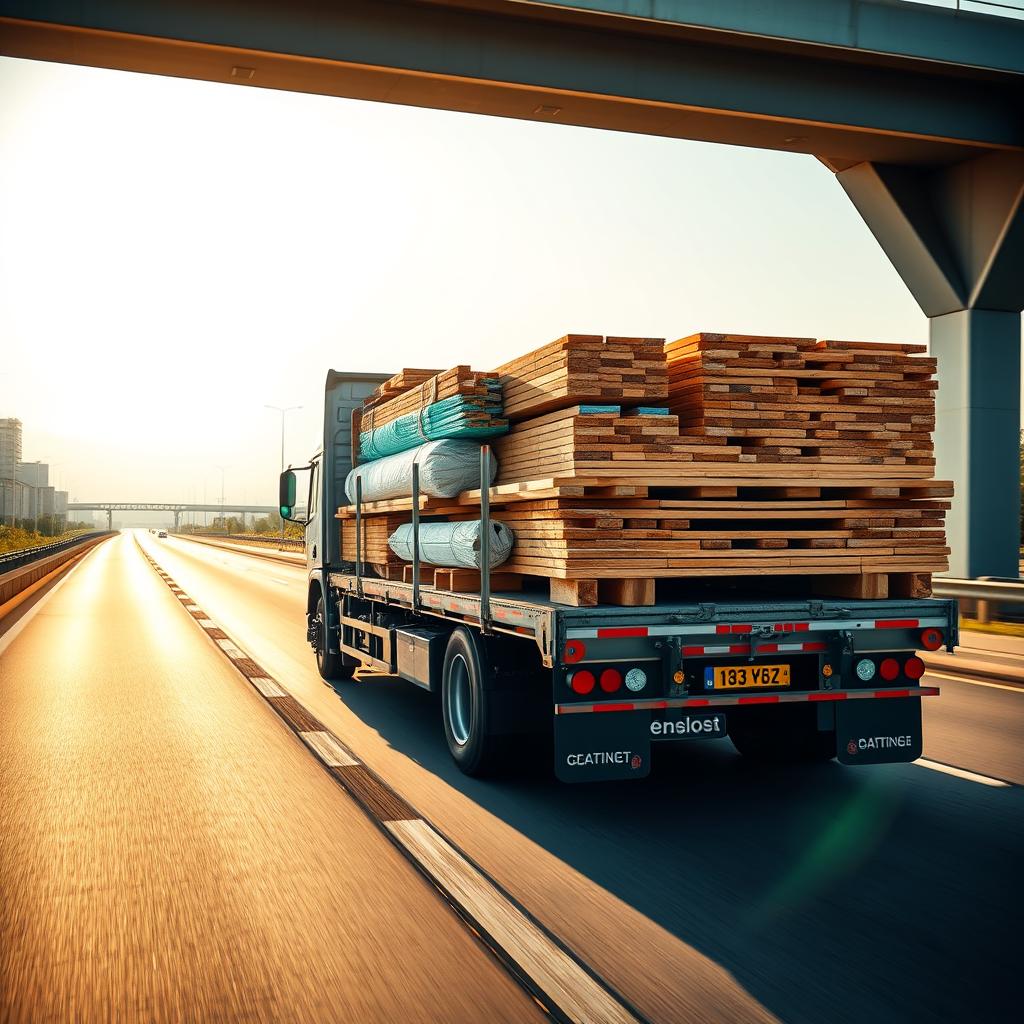
Ask a building supply dealer about their insurance program and you'll almost always hear: "I've got property coverage on the building and stock, and commercial auto on the trucks." What you rarely hear — until after a loss — is: "And I've got inland marine for everything in between."
That gap between the property policy and the auto policy is where a significant portion of a dealer's actual exposure lives. Understanding how inland marine works, and why it's essential for a delivery operation, can prevent a very expensive discovery.
Where Property Insurance Stops
Commercial property insurance covers property at a fixed, insured location. Your building, your equipment, your inventory — all covered at the yard or warehouse address on the policy. This seems straightforward until you consider how much of a dealer's inventory is actually not at that location at any given moment.
Inventory on a delivery truck is not at the insured location. Inventory staged at a customer's job site for tomorrow's installation is not at the insured location. Inventory at your satellite yard across town is not at the insured location (unless that location is specifically scheduled). Customer-owned materials you're storing and processing are not your property under most property policies.
Property policies do have extensions for property away from the described premises — but these extensions are typically modest. Standard policies may extend $5,000 to $25,000 in off-premises coverage, sometimes less. For a dealer running active deliveries, this is insufficient by orders of magnitude.
The technical term for the gap is the "loading dock rule." Property insurance covers stock until it's loaded onto a conveyance for transport. Once the materials leave the dock, the property policy's practical coverage often ends — and the commercial auto policy picks up the truck, but not necessarily the cargo.
Where Commercial Auto Ends
Commercial auto insurance covers the vehicle — liability for accidents the truck causes, and physical damage to the truck itself. It is not designed to cover the cargo.
The liability section of a business auto policy responds when your truck injures someone or damages their property. It does not cover the value of the lumber that falls off the truck and is destroyed.
Motor truck cargo coverage — sometimes called cargo legal liability — is a separate coverage that can be added to a commercial auto policy or written as a standalone. It covers the dealer's legal liability for damage to cargo in transit. Even with motor truck cargo, there are often limits: maximum per-occurrence sublimits, cargo type exclusions, and valuation issues.
The practical result for many dealers: they have property coverage that stops when materials leave the dock, and commercial auto coverage that covers the truck but not the cargo. Inland marine fills the space between.
What Inland Marine Actually Covers for Dealers
Inland marine is an old line of insurance — originally written to cover goods transported across bodies of water — that evolved to cover all forms of goods in transit and goods that don't stay in one place. For building material dealers, the relevant coverages are:
Cargo in transit / goods in transit. Coverage for building materials on your delivery trucks, from departure at your yard to receipt at the destination. This covers lumber, drywall, roofing, millwork, and other materials against loss from collision, overturn, theft, fire, and other covered causes while in transit.
Installation floater. Coverage for materials that have been delivered and are awaiting installation or are in the process of being installed. Once materials are at the job site and staged for the contractor, they're neither at your yard nor in your truck — the installation floater covers this in-between state.
Contractors' equipment floater. For dealers who transport equipment — forklifts, boom lifts, generators, compressors — to and from job sites, this coverage follows the equipment wherever it goes.
Stock at satellite / temporary locations. If you operate a satellite yard or store inventory at a third-party location, inland marine can cover that inventory without scheduling it as an additional property location (which often triggers separate premiums and requirements).
Care, custody, and control (CCC) coverage. Property policies contain a CCC exclusion — they don't cover damage to property that belongs to others but is in your possession. If you're holding customer-furnished materials, processing custom millwork, or storing consignment inventory, a CCC loss is uncovered by your property policy. Inland marine provides this coverage.
Bailee coverage. A specialized form of CCC coverage for dealers who hold customer property — cut-to-order lumber, custom windows, stored materials awaiting pickup. Bailee coverage responds when customer property is damaged or stolen while in your custody.
Real Examples of Transit Losses
These are the kinds of losses that inland marine addresses that would otherwise fall through the gap between property and auto:
A delivery driver takes a curve too fast on a wet county road. The load — $18,000 in engineered lumber — shifts, breaks the straps, and is destroyed when it slides off the flatbed. The truck is insured and the driver is fine. The lumber is not insured without cargo coverage.
A jobsite delivery is staged under a tarp at a residential construction site. Overnight, thieves load the framing lumber — $12,000 worth — onto their own trailer and drive away. The dealer's property policy covers the yard. The auto policy covers the truck parked back at the yard. Neither covers the lumber at the job site.
A customer drops off custom-milled decking boards for a planing operation. While in the dealer's care, a warehouse roof leak saturates and ruins the boards. The property policy covers the dealer's own property. The customer's boards are CCC — excluded. Bailee coverage pays.
Coordinating Inland Marine with Auto and Property
The most common problem we fix when reviewing dealer programs is the coordination of inland marine, commercial auto, and property. Written carelessly, these three policies can deny each other when a claim happens, each pointing to the others as the responding coverage.
The correct structure is a written coordination: property covers fixed-location inventory, inland marine covers goods in transit and temporary-location inventory, and commercial auto covers the truck. Motor truck cargo on the auto policy and cargo coverage on the inland marine policy need clear "other insurance" provisions that specify which responds first and how they share.
When a cargo claim happens — and for a dealer running active deliveries, it will eventually happen — you want a claim check, not a coverage dispute. The only way to ensure that is to coordinate the policies at inception, not at claim time.
If your dealer program doesn't include inland marine, or if you're not sure whether your cargo is actually covered in transit, that's worth a conversation before the next delivery run leaves the dock.
Need this coverage for your yard?
Get a real quote in about 15 minutes — we shop A-rated specialty markets for dealers.