What Insurance Does a Lumber Yard Need? Complete Coverage Checklist
By Josh Cotner
One of the first questions I get from new lumber yard and building supply clients is: "What insurance do I actually need?" The answer is more specific than most brokers will give you, because a building material dealer has a unique combination of exposures that doesn't map cleanly onto any off-the-shelf business insurance program.
Here's the complete coverage checklist — eight lines, each explained in terms of why it matters specifically for a dealer operation.
1. General Liability Insurance
General liability is the foundation of any dealer program. It covers third-party bodily injury and property damage arising from your premises, your operations, and the products you sell and deliver.
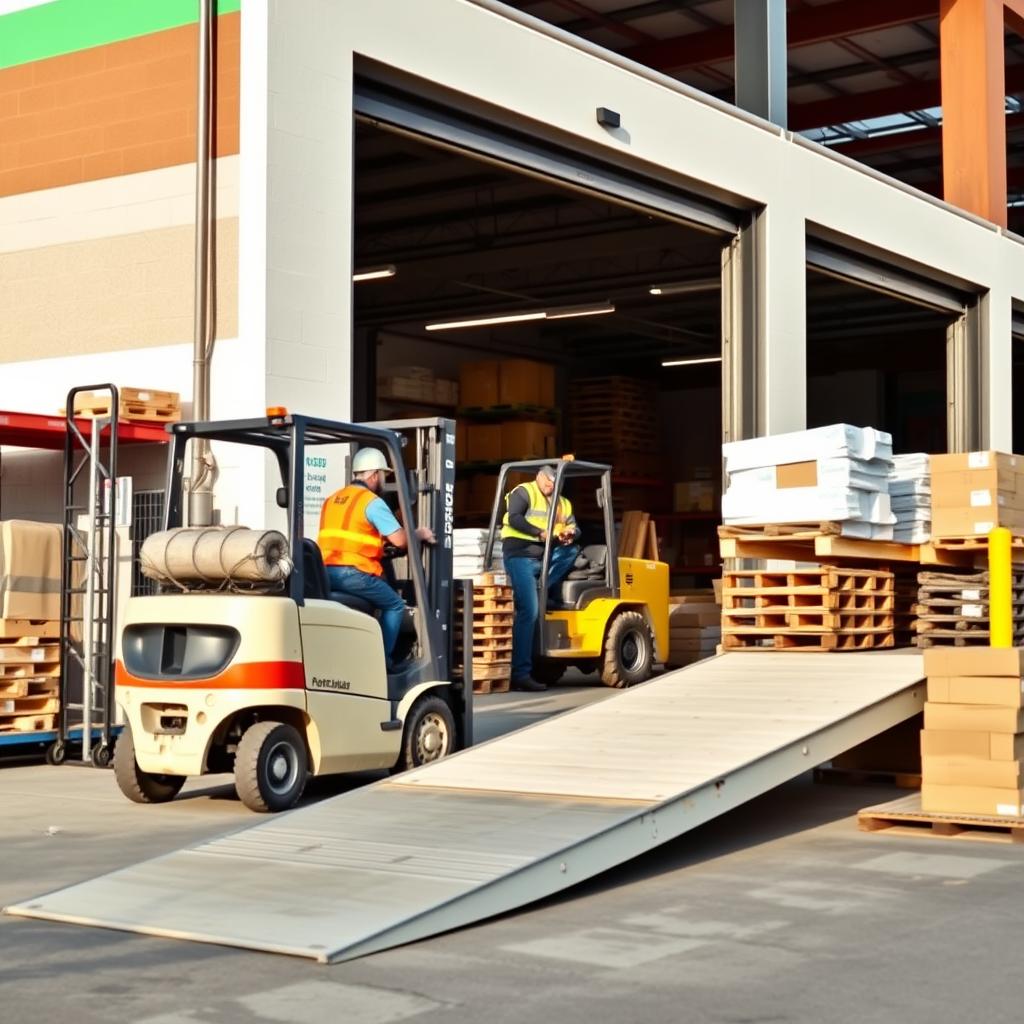
For a lumber yard, the premises exposure is significant: contractor customers and members of the public walk your yard every day, forklifts share lanes with pedestrians, loading docks see constant activity. A slip, a forklift-pedestrian incident, or a falling load that injures a customer — these are GL claims.
The operations exposure includes damage you cause at a job site during delivery, materials staged at a customer's site that damage adjacent property, and similar contractor-interaction incidents.
Why this matters for dealers: Most GL policies are written for retail stores or light contractors. A dealer needs coverage with the right class codes for a building supply operation, the right products-completed operations scope, and enough limit to absorb a serious premises incident.
2. Property & Inventory Insurance
Property coverage for a lumber yard must be structured very differently from standard commercial property. The dominant exposure is fire — stacked, kiln-dried lumber is a catastrophic fire risk — and most standard property markets either exclude or severely sublimit outdoor inventory.
A dealer-grade property policy covers the building and improvements at replacement cost, stock and inventory at replacement cost (not actual cash value), outdoor yard inventory through an explicit outdoor-property endorsement, sprinkler discharge and leakage, debris removal after a fire, and ordinance-or-law upgrades required during rebuild.
Why this matters for dealers: If your property policy caps outdoor inventory at $10,000 and you have $500,000 in the yard, you have a $490,000 uninsured exposure. This is the most common catastrophic gap we find in dealer programs.
3. Workers' Compensation
Workers' compensation is legally mandatory in virtually every state the moment you have employees, and for a lumber yard it is a high-priority coverage — not just a compliance checkbox.
The workforce is genuinely hazardous: forklift operators and lift-truck drivers, material handlers moving heavy loads by hand, saw operators and kiln staff, delivery drivers on the road. Each group has specific class codes, and the claims frequency and severity in these codes is real.
Workers' comp covers medical treatment, disability wage replacement, vocational rehabilitation, and death benefits for work injuries — and the employers' liability section (Part Two) protects the business against suits outside the workers' comp exclusive remedy.
Why this matters for dealers: The experience modification factor (X-Mod) driven by your claims history is the single largest lever on your work comp premium. Managing claims well, maintaining a return-to-work program, and keeping the mod low can save tens of thousands of dollars per year on a mid-size operation.
4. Commercial Auto & Delivery
Most lumber yards and building supply dealers run a delivery fleet — box trucks, flatbeds, boom trucks, ramp trucks — and commercial auto is essential. Personal auto policies exclude business use, and a loaded delivery truck is unambiguously a business vehicle.
A dealer commercial auto program covers liability for accidents the fleet causes, physical damage to the trucks (collision and comprehensive), hired and non-owned auto coverage for employees driving their own vehicles on business, and motor truck cargo for the materials on the truck.
Why this matters for dealers: A loaded delivery truck in a serious accident creates catastrophic liability. The commercial auto policy is the first line of response, and it needs to be properly structured — including hired and non-owned coverage that most dealers overlook — and backed by sufficient umbrella limits.
5. Inland Marine & Cargo
Inland marine covers property that moves — goods on your delivery trucks, equipment at job sites, stock at satellite locations, and materials in your care, custody, or control.
The coverage fills the gap between property insurance (fixed locations) and commercial auto (the truck, not the cargo). For a dealer running delivery, this gap is real and consequential: inventory in transit, staged at a job site, or held as customer-furnished materials is often uncovered by both the property and auto policies unless inland marine is specifically added.
Why this matters for dealers: If a customer's custom-milled decking is ruined in your storage facility, your property policy won't cover it — it's not your property. Bailee and CCC coverage under inland marine does.
6. Product Liability Insurance
Product liability covers claims arising from the materials you sell and distribute — even materials you didn't manufacture. As a dealer, you occupy a position in the chain of commerce that exposes you to product liability suits when goods you sold prove defective or dangerous.
Your general liability policy includes a products-completed operations hazard, but for a distributor this is rarely sufficient in limit or scope. A dedicated product liability policy (or properly structured endorsement) provides dedicated limits, defense funding that doesn't erode indemnity, and distributor-specific scope.
Why this matters for dealers: Defective drywall, recalled roofing, failed fasteners — when these products cause injury or property damage, plaintiffs sue everyone in the distribution chain. You will be named even if the defect originated with the manufacturer, and defense costs alone can run six figures.
7. Equipment Breakdown
Equipment breakdown — historically called boiler and machinery — covers the sudden, accidental mechanical or electrical failure of equipment that property insurance excludes. For a dealer, this means kilns, air compressors, dust collection systems, forklift chargers, boilers, pressure vessels, and electrical panels.
When a kiln cracks, a main compressor seizes, or an electrical panel shorts and kills power to the facility, the property policy will not respond — these are mechanical and electrical breakdowns, not fire or weather events. Equipment breakdown covers the repair or replacement cost and the business interruption while the facility is down.
Why this matters for dealers: A kiln failure or main compressor outage can shut down operations for days or weeks. The business interruption cost of that downtime — plus the repair bill — can easily reach six figures.
8. Umbrella & Excess Liability
An umbrella policy sits over your general liability, commercial auto, and employers' liability policies, providing additional limits when a claim exhausts the underlying coverage.
For a lumber yard, the umbrella is not optional — the severity exposure is too real. A forklift-pedestrian fatality, a loaded delivery truck in a multi-vehicle accident, or a major product liability claim can exhaust a $1 million GL limit and continue into the hundreds of thousands or millions above. The umbrella responds after the underlying limit is paid.
Why this matters for dealers: Most dealers carry at least $5 million in umbrella limits; operations with significant delivery fleets or high-risk product lines often carry $10 million or more. The premium relative to the exposure is the best value in the dealer program.
The Case for a Packaged Dealer Program
These eight coverage lines work together. Property coordinates with business income and inland marine. Commercial auto coordinates with inland marine and umbrella. GL coordinates with product liability and umbrella. Workers' comp coordinates with employers' liability and umbrella.
When these coverages are placed with different brokers or different carriers without coordination, the "other insurance" clauses and coverage definitions fight each other at claim time. Each carrier points to another as the responding policy, and the claim takes years to resolve — often at the dealer's expense.
A packaged dealer program — eight lines, one submission, one broker — eliminates that problem. The policies are written to work together because they were structured together. It's also usually cheaper, because carriers writing a full account price it more aggressively than individual lines.
If you'd like to see what a coordinated dealer program looks like for your specific operation, we can quote it in about 15 minutes.
Need this coverage for your yard?
Get a real quote in about 15 minutes — we shop A-rated specialty markets for dealers.